Rachel’s alcohol-related memory gaps
The Girl on the TrainRachel Watson’s alcohol-related memory gaps make her uncertain not only about what happened while she was drunk, but also about whether her own recollections can be trusted. For a time, Tom’s version of events fills those absences: she accepts accounts of conduct she cannot remember and even doubts a memory of his violence. When fragments return, the uncertainty does not vanish all at once. Instead, Rachel must separate genuine memories from images displaced or reshaped by fear, and recognize how Tom has used her blackouts to make her question herself.
The Gaps and Their Consequences
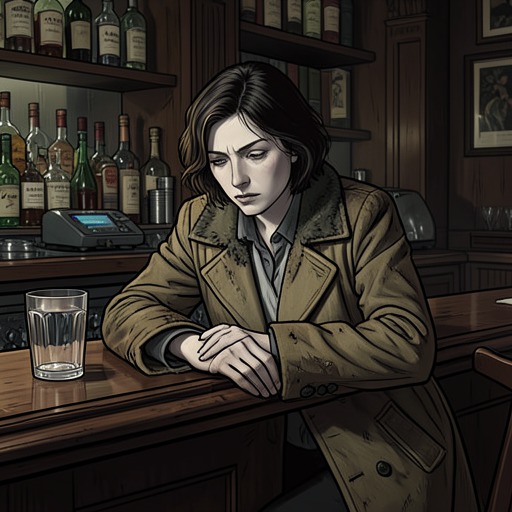
Rachel’s missing time is presented through the aftermath rather than through a reliable account of the events themselves. She wakes with little or no memory of what occurred, while Tom supplies explanations for her behavior. His descriptions conflict with the fear she recalls, leaving her unable to reconcile her own partial impressions with his confident version. The gap is therefore more than an absence of information: it makes Rachel unsure whether she is responsible for acts she cannot remember and whether her fear is itself trustworthy.
A later night on the living-room sofa brings the pattern back with unusual clarity. As Rachel makes plans to leave, find a new job, and sever her ties with Tom, his familiar accusation about her drunkenness returns to her mind. The words trigger a sense that she has heard them before, and memories begin to gather around them: waking after a night she cannot account for, Tom explaining what he said she had done, and the damaged plaster associated with a golf club. Rachel remembers being frightened, but not the violence Tom attributes to her. Her inability to verify his account has trained her to treat his explanation as the available truth.
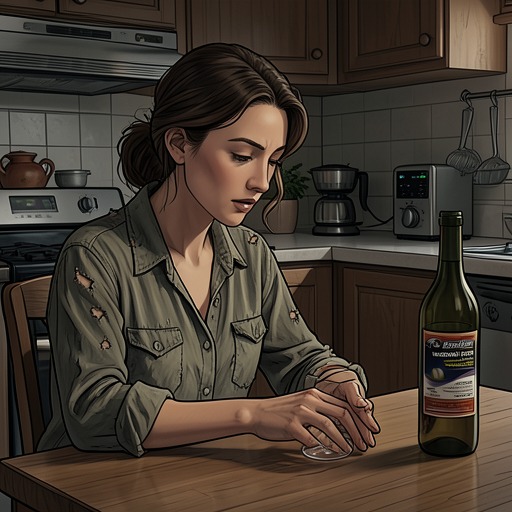
Over time, she stops asking for details or challenging Tom when he volunteers them. She does not want to hear what she might have said or done while drunk. Instead, she apologizes for the version of herself he describes and promises to behave differently. The repeated pattern turns uncertainty into submission: because Rachel cannot remember, Tom’s account sets the terms of what she believes about herself. He also threatens to record her during these episodes, although he never plays a recording to her.
A Memory Returns
On the morning of 18 August 2013, Rachel describes one memory leading to another, as if she is finding a route through darkness. At first, the recollection of the underpass seems more likely to be a dream than a record of something that happened. Her hesitation has a precedent. Rachel remembers a party where she had believed she said goodbye to Clara warmly; in fact, Tom had to help her leave while Clara stayed away from her. That discrepancy gives Rachel reason to distrust an apparently vivid memory, even when it feels real.
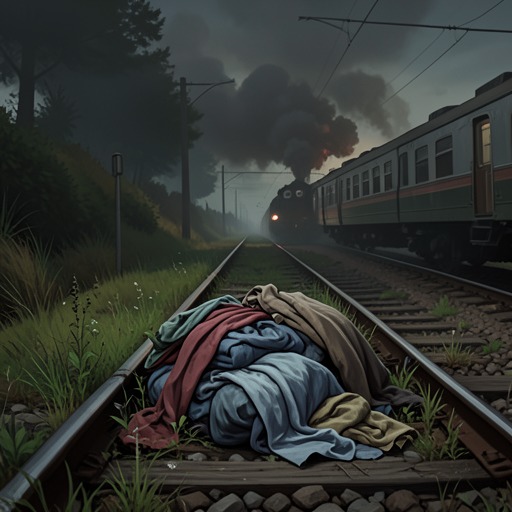
The resemblance between a remembered scene and a dreamlike image initially deepens that doubt. Rachel recalls the underpass, a figure approaching in anger, and being left there after he struck her. She wonders whether the scene has been imagined, as her memory of Clara’s kindness had been mistaken. Then the recollection settles into recognition: Tom had lied, and the assault was not a fantasy. The remembered fear beside the golf club also changes meaning. Rachel now knows that she was not the person wielding it, contrary to what Tom had led her to believe.
This recovery does not arrive as a single, complete revelation. Rachel first tries to contact the police and Detective Sergeant Riley, but hangs up before speaking. She then goes to the station and waits for a Sunday train, moving between disbelief and desperation. The hesitation shows that remembering an event and feeling able to make others believe it are separate problems. Her certainty is newly won, while the consequences of acting on it remain unclear to her.
The Displaced Image
A further recovered detail resolves a different confusion. Rachel had combined two memories: Anna walking away in her blue dress, and Tom leaving with a woman who got into a car with him. The woman in the car was not Anna. Rachel recalls that she wore jeans and a red T-shirt, and identifies her as Megan. A detail of clothing, previously displaced between scenes, allows Rachel to distinguish the memories and place Megan in the event she had not understood.
The correction matters because it is not simply a recovered image added to an otherwise stable account. Rachel recognizes that her mind had joined elements from separate encounters, producing a misleading composite. Her memory can therefore be both a source of knowledge and a source of error; recovery involves testing one remembered detail against another, not treating every fragment as automatically true. In this instance, the contrast between Anna’s blue dress and Megan’s jeans and red T-shirt gives Rachel a concrete means of separating the two scenes.
Change and Narrative Significance
Before these recoveries, Rachel briefly believes the matter is closed. A man has persuaded her that she did not witness anything important and had merely been on the same street. She accepts that explanation, yet remains troubled by an unresolved feeling. The return of memory overturns this premature closure: the apparent blank is not proof that nothing happened, and the story she had been given about her own actions cannot be accepted without question.
Rachel also says that her fear after her encounter with Scott has made her afraid to go out in the middle of the night to buy alcohol and to let herself become vulnerable again. This does not erase the years in which drinking and lost time shaped her understanding of herself. It does, however, mark a change in the immediate pattern she describes: fear now interrupts the behavior that had repeatedly left her unable to account for the night before.
The memory gaps shape the novel’s account of knowledge as well as Rachel’s experience. The reader, like Rachel, must revise an interpretation when a fragment returns or an image is correctly reassigned. Her recollections emerge out of order, are initially mistaken for dreams, and gain meaning through comparison with other remembered scenes. The eventual distinction between Tom’s account, Rachel’s fear, and the recovered events makes memory a contested record rather than a dependable transcript. Its restoration is decisive because it lets Rachel recognize both what Tom concealed and how thoroughly the gaps had made her doubt her own perception.